


The Marriage I Wanted vs. the Marriage My Parents Wanted

A conversation with Dr. Yuxin Sun on love, family, and building a marriage between two worlds
Many immigrant parents will tell you, with complete sincerity, "We don't care who you marry. We just want you to be happy." Then you bring someone home. Suddenly the questions start. Where is this person from? What do they do? What religion are they? Which family are they from? What languages do they speak? Do they understand our culture? And somewhere in the middle of it, you realize your happiness came with terms and conditions nobody mentioned.
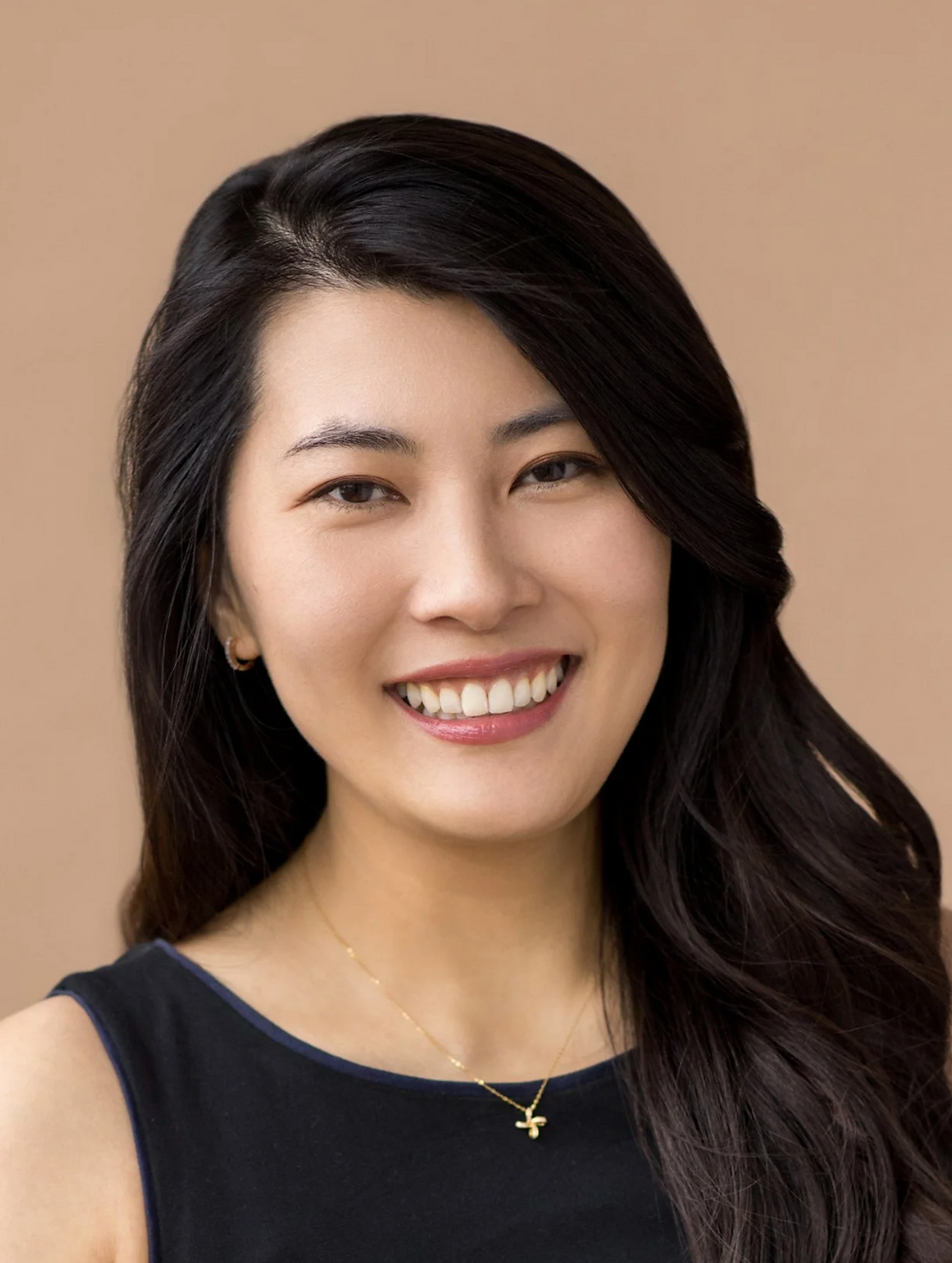
On this episode of Between Two Worlds with Dr. Phebe, I sat down with Dr. Yuxin Sun, licensed psychologist, clinical supervisor, and founder of Sunburst Psychology, to talk about what happens when the marriage that is right for you does not look like the marriage your family imagined. Dr. Sun specializes in intercultural relationships, identity, and life transitions, and she offers therapy in both English and Mandarin. She also brings something else to this conversation: she grew up in China, married a man who grew up in India, and has lived this story herself.
Because for many of us raised in immigrant families, choosing a partner is never just an individual decision. You are not only marrying a person. You are marrying into traditions, languages, definitions of respect, and quite possibly four parents with opinions.
The picture nobody painted out loud
In collectivist families, a lot is never said directly. It is implied, absorbed, and expected. Dr. Sun grew up in a small town in southern China with a strong patriarchal culture. The explicit message was about who she was supposed to be as a wife. The implicit message was about who she was supposed to marry: someone with a background just like hers.
Her family's list was clear enough. Someone responsible. Someone ambitious who would take charge of the household. A man, certainly. And someone who could fit in with the family, sharing the language, the drinking, and the fun.
As an adult, some of that still fit. She wanted someone driven and intelligent. But she was also looking for something her family's list never named: a person who shared her values and her experiences, not just her family's.
I grew up hearing these conversations too. My mom was the youngest in a family with many women, so I watched a lot of weddings and overheard a lot of kitchen commentary about whose husband was this and whose wife was that. The standards were set long before I ever asked myself whether I wanted to marry at all.
Functional marriage and the marriage we are building now
Dr. Sun describes many of our parents' marriages as functional. The marriage served a purpose: survival, financial security, stability, social acceptance, family alliances. Her own parents rarely talked to each other about anything other than plans, finances, and logistics.
This is not a criticism. Those standards came from survival contexts and generational pressures our parents had to navigate. As Dr. Sun put it, both sets of values are legitimate. They simply come from different needs in different times.
What our generation is adding to the list are questions our parents rarely had room for:
Can I actually talk to you?
Can I be vulnerable with you?
Do I feel emotionally safe with you?
Can we repair after conflict?
Dr. Sun said that as she grew older, she could finally name it. She did not just want someone who could take care of her. She wanted someone who understood her.
Finding someone else who lives in between
Dr. Sun identifies as bicultural. She grew up in China and has spent much of her adult life in the United States. Her husband grew up in India and has also spent most of his adulthood here. Neither of them identifies fully with their culture of origin or fully with American culture.
Before meeting him, she had always had to pull out one side of herself to connect with someone: the Chinese part for some people, the Western part for others. With him, she didn't have to choose. They were both floating between two worlds, not fully belonging to one identity and not rejecting either. She felt seen. He felt seen. That sense of recognition is something many immigrants and children of immigrants spend years searching for.
Telling the family
She waited about five months before telling her parents. She knew they hoped she would marry someone Chinese, someone who shared their values and their language, someone they could actually talk to. They did not take it well. They were anxious. They were scared. Living in China at the time, they had no exposure to Indian culture and no picture of what an intercultural marriage could even look like.
When I asked what their biggest fear was, her answer was simple: the unknown. Underneath it all were three questions. Will she be happy? Will she be taken care of? Will she be safe?
What parents are really afraid of
I think many immigrant parents carry those same questions without the words or the courage to say them. "He's not from our culture" often becomes a blanket thrown over a whole set of fears:
Will this person understand my child?
Will our grandchildren know us?
Will his family accept her?
Will we be able to communicate?
Will our child still belong to us?
At the time, Dr. Sun experienced her parents' reaction as a rejection of her and her relationship, and she felt hurt and angry. Looking back now, with years of clinical work on intergenerational relationships, she sees something else: grief. Her parents were watching their daughter grow into a world they did not understand, and they feared being shut out of it.
There is real loss in that for parents. If something goes wrong in a world they don't know, can they even help? It is often easier for our parents to say they don't understand the kids' new math homework than to say they're afraid of losing us.
If you are a parent reading this, I hope you give yourself the chance to name what you are actually worried about and share it with your child. And if you are the adult child, I hope you can approach your parents with a little more curiosity about the fear underneath their resistance.
Rice porridge, kung pao chicken, and the art of translation
You don't realize how many things you consider "normal" until you marry someone whose normal is completely different. For Dr. Sun and her husband, the clearest example was food.
They are both foodies, but their palates could not be more different. She grew up loving original flavors, soups, and moist dishes. He loves heavily spiced, drier food, and will add half a bottle of chili flakes to a pizza she eats plain.
When they first moved in together, she decided to play the good wife and make dinner. She cooked rice porridge, a common evening meal in her hometown. He ate it, thanked her sincerely, and then very politely asked her not to cook for him. The food that comforted her simply did not comfort him.
What followed were rounds of acceptance, grief, and negotiation. Today they eat together but cook separately. She has her soupy noodles; he has his pasta. When one of them makes a dish the other loves, they make extra. Nobody feels rejected.
This is about more than dinner. It is about honest communication, loosening inherited gender roles, and giving each partner room to keep the parts of their identity that bring them joy. As immigrants, we are remarkably adaptable, and with a willing partner we get to define these things for ourselves.
I'll be honest: as a Ghanaian woman, I know I would have been in "trouble" for not cooking for my partner. That is what is expected of a wife where I come from. But in a new country, with different schedules and different realities, falling short of an inherited standard is not a personal failure. Read that again!
Love in two different languages
Dr. Sun often finds herself translating between the two families, and not just their words.
Her parents are quiet people. They rarely say "I love you" and don't hug much. They show love through action: helping with chores, caring for the pets, cooking, doing laundry, sometimes even offering financial help. Early on, her husband honestly wasn't sure if they liked him.
So she translated. When her parents asked what he liked to eat, she steered them toward familiar dishes like kung pao chicken. Her mother, who had never once made kung pao chicken in Dr. Sun's entire life, learned how to cook it. Now, before every visit, her mom asks what he wants to eat so she can buy the spices ahead of time. Her dad asks him for help with technology. That is how her parents say: you are family now.
His family sits at the opposite end of the spectrum. On her first outing with them, she sat in the back of an Uber between his mother and his sister while both talked to her at the same time, nonstop, for two full minutes. His family connects through words, hugs, kisses, calls, texts, and FaceTime.
As a therapist who takes every conversation seriously, she put enormous effort into each exchange and was exhausted. Her husband had to translate for her, too: in his family, "How are you?" is connection, not an invitation to process your whole day. "I'm doing well, how are you?" is enough.
Intercultural marriage means learning that love can sound like silence in one family and like a crowded car in another, and both can be real.
When "should" turns into resentment
I asked Dr. Sun to put on her psychologist hat: what do immigrant and first-generation adults normalize in relationships simply because it's what we grew up seeing?
Her answer was one word: should.
I should be a good wife. I should cook dinner. I should handle the housework. In her work with couples, she sees how quietly these shoulds take hold, often requiring us to negate parts of ourselves without even noticing. Over time, the should becomes a deficit of needs, of joy, of contentment. It becomes resentment, burnout, and exhaustion. This happens regardless of gender or relationship type.
She caught it in herself too. She teaches, works full-time, runs a practice, and is writing a book, yet she had somehow assumed that household chores were automatically her responsibility.
For our parents' generation, the shoulds often worked within their cultural and generational context. They just don't fit the lives many of us are living now.
I know this one personally. When I was married, I was raising three boys, running a business with employees, and working through my doctoral program. My mom stepped in to help with cooking and other tasks, which was her way of supporting me. But it became a point of conflict, because a wife was "supposed" to be doing those things herself. At one point I considered leaving my doctoral program because I couldn't see how to balance it all with what was expected of me as a wife. If I had kept going that way, the resentment would only have grown.
Sacrifice or self-abandonment? The gift test
Sacrifice is a core value in collectivist cultures. We are constantly reminded of what our parents and grandparents gave up for us. Giving up parts of ourselves for family and community is a genuine way of expressing love.
So when does sacrifice become self-abandonment? Dr. Sun admits it's a fine line and hard to make tangible. But she offered a framework she uses with couples and individual clients from similar backgrounds, and it is one I will be sitting with for a long time: think of it as a gift.
A true gift is given without expecting a return. Not money, but the quieter returns: they'll love me more, they'll be grateful, this will finally make me a good wife, a good mother, a good son.
When you're torn between letting go of yourself and living out a value you hold, ask:
Am I giving from what I actually have in my resource pool?
Can I give this without expectation or resentment?
Or am I pulling from my reserves, knowing I'll feel resentful afterward?
If it's the last one, it is no longer a gift. It is an obligation. And as Dr. Sun put it, in that case it would be better for both people if you didn't give it at all.
I asked her to finish one sentence: A healthy marriage should never require you to…
Her answer: "…become someone you don't want to be."
Bridge the Gap: know what you're really choosing between
Before you frame it as choosing your partner or your family, get clear on what the choice actually is. Often it isn't culture versus love. It's:
Expectations versus compatibility
Approval versus authenticity
Tradition versus your emotional health
You will sometimes have to be okay with disappointing people. If you're going to disappoint anyone, don't let it be yourself.
And remember: you can honor where you come from without recreating every relationship dynamic you inherited.
Questions to sit with
Marriage across cultures forces us to do what every couple should probably do anyway: have the hard conversations and ask ourselves honest questions.
Why do I do it this way?
Who taught me this?
Does this still work for me?
Is this realistic for the life I'm living now?
The goal isn't to build the exact marriage our parents imagined, and it isn't to reject their model entirely. It's to build something beautiful that makes sense for us, here and now, keeping what serves us and gently letting go of what doesn't.
Keep the conversation going
Did you marry who your family imagined for you, or did you have to rewrite the whole script? I'd love to hear your story.
If this resonated, share it with someone who gets it, maybe even the one who muted the family group chat because everyone keeps asking when they're getting married.
🎧 Listen to the full episode of Between Two Worlds with Dr. Phebe: https://open.spotify.com/episode/5CCJrEuVCLJscaxVKz0nLQ?si=8BKVcHl-RgqVHG5L1n2Njg&utm_source=copy-link
About Dr. Yuxin Sun
Dr. Yuxin Sun is a licensed psychologist, clinical supervisor, and founder of Sunburst Psychology. She specializes in intercultural relationships, identity exploration, and life transitions, and provides therapy in English and Mandarin. Learn more about her work at https://www.sunburstpsych.com/about-us


Comments